

10% OFF your first purchase use code WELCOME10
$185.63 Original price was: $185.63.$123.75Current price is: $123.75.
50 in stock
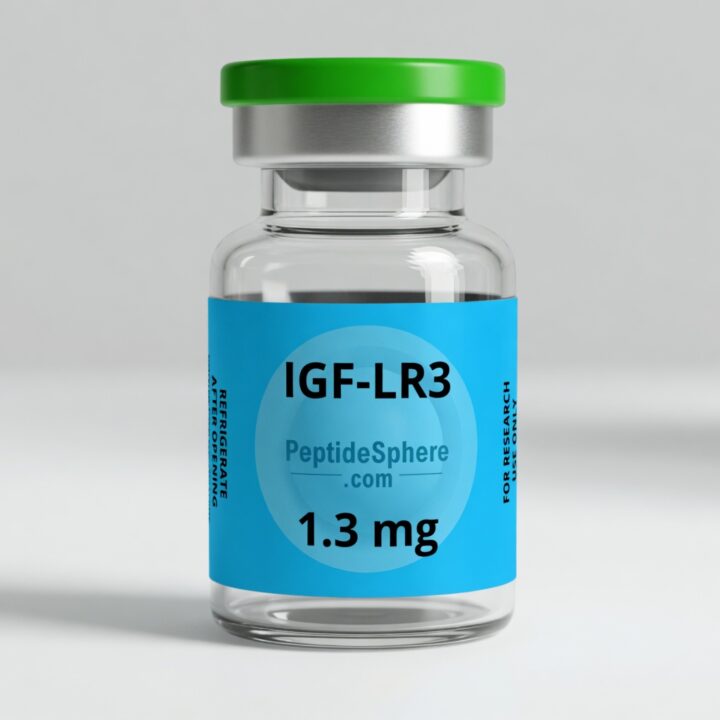
IGF-1 LR3 (Insulin-like Growth Factor-1 Long R3)
IGF-1 LR3 is a synthetic analog of Insulin-like Growth Factor-1 (IGF-1) with a modified amino acid sequence (Long R3) that significantly extends its half-life and biological activity. It is one of the most potent anabolic peptides studied for its role in cellular growth, muscle development, and tissue repair.
Research Properties:
Key Areas of Research Interest:
Administration in Research:
For Research Use Only. Not for human consumption. IGF-1 LR3 is intended strictly for laboratory research and in-vitro experimentation.
IGF-1 LR3 (Insulin-like Growth Factor-1 Long R3)
IGF-1 LR3 is a synthetic analog of Insulin-like Growth Factor-1 (IGF-1) with a modified amino acid sequence (Long R3) that significantly extends its half-life and biological activity. It is one of the most potent anabolic peptides studied for its role in cellular growth, muscle development, and tissue repair.
Research Properties:
Key Areas of Research Interest:
Administration in Research:
For Research Use Only. Not for human consumption. IGF-1 LR3 is intended strictly for laboratory research and in-vitro experimentation.
IGF-LR3 (Insulin-Like Growth Factor Long R3) is a modified form of IGF-1, a naturally occurring hormone that plays a crucial role in cell growth, development, and repair. IGF-LR3 has a longer half-life and increased potency compared to IGF-1, making it a focus of extensive research for its potential therapeutic applications in tissue regeneration, muscle growth, and age-related conditions.
IGF-LR3 has a longer half-life than native IGF-1, which allows for prolonged effects in research studies. Its ability to stimulate growth and repair processes in various tissues makes it a valuable tool in understanding the mechanisms of aging and muscle regeneration.
IGF-LR3 is offered exclusively for laboratory research purposes. It is not approved for human or animal use, nor is it intended to diagnose, treat, cure, or prevent any disease or condition.
This website contains research products intended only for adults 21 years of age or older.
By entering this site, you confirm that:
Please complete the form below to continue.
Reviews
There are no reviews yet.