

10% OFF your first purchase use code WELCOME10
$112.50 Original price was: $112.50.$75.00Current price is: $75.00.
79 in stock
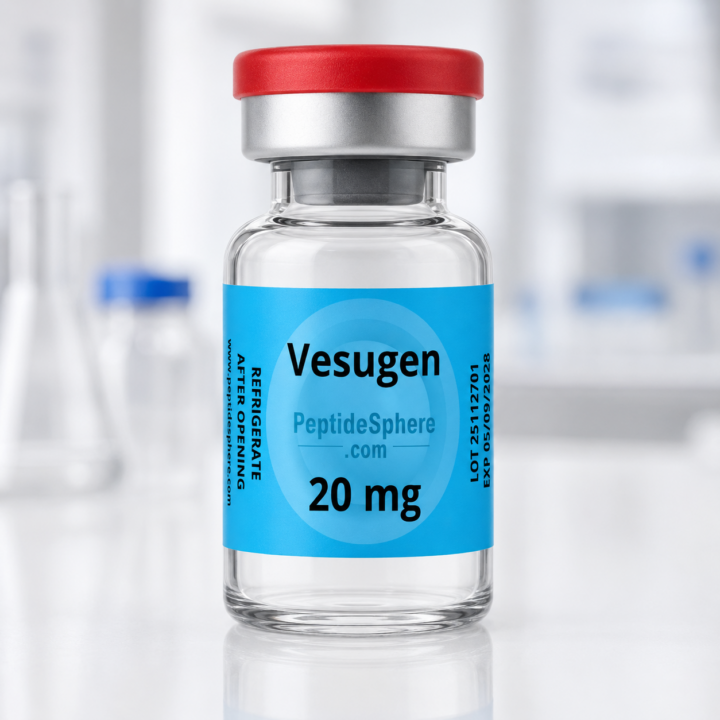
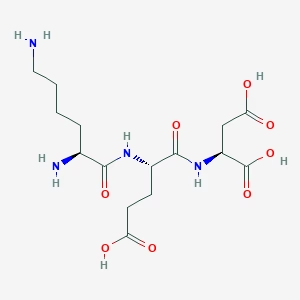
Vesugen (KED)
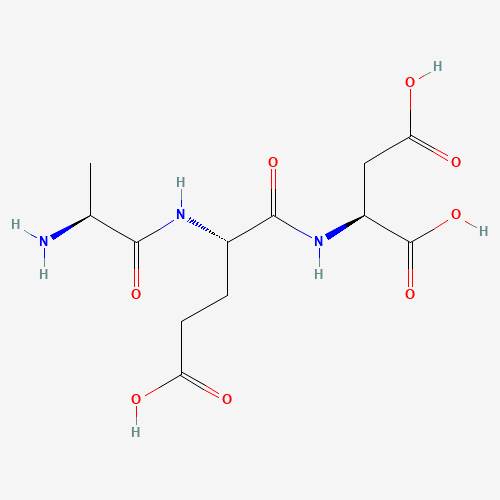
Vesugen, also known as KED (Lys-Glu-Asp), is a synthetic tripeptide bioregulator developed as part of the research pioneered by Professor Vladimir Khavinson. It is designed to target vascular endothelial cells and support the health of the vascular system. Vesugen is studied for its potential vasoprotective, geroprotective (anti-aging), and neuroprotective properties through epigenetic regulation of gene expression, particularly genes involved in cell proliferation (such as Ki-67).
Note: Vesugen is not FDA-approved and is used exclusively for research purposes.
Peptides it pairs well with:
Peptides/Drugs to Avoid Combining:
Vesugen (KED)
Vesugen, also known as KED (Lys-Glu-Asp), is a synthetic tripeptide bioregulator developed as part of the research pioneered by Professor Vladimir Khavinson. It is designed to target vascular endothelial cells and support the health of the vascular system. Vesugen is studied for its potential vasoprotective, geroprotective (anti-aging), and neuroprotective properties through epigenetic regulation of gene expression, particularly genes involved in cell proliferation (such as Ki-67).
Note: Vesugen is not FDA-approved and is used exclusively for research purposes.
Peptides it pairs well with:
Peptides/Drugs to Avoid Combining:
Vesugen, a synthetic tripeptide (Lys-Glu-Asp), has gained attention in research for its potential role in supporting vascular health, cellular repair, and tissue regeneration. Designed to mimic naturally occurring peptide sequences, Vesugen is studied for its ability to modulate endothelial function and promote tissue homeostasis, making it a promising candidate for research in cardiovascular and regenerative medicine.
Vascular Health and Endothelial Function: Vesugen is widely studied for its potential to support blood vessel integrity and enhance endothelial cell function in experimental models.
Tissue Repair and Regeneration: Researchers are investigating Vesugen’s ability to promote cellular repair and tissue regeneration, particularly in vascular and connective tissues.
Anti-Aging and Cellular Homeostasis: Preliminary studies have explored Vesugen’s role in mitigating age-related vascular decline and supporting cellular health, relevant for aging and degenerative disease research.
Vesugen’s targeted action on vascular and cellular repair pathways makes it a valuable tool for studying mechanisms of endothelial function, tissue regeneration, and aging. Its stability and concise peptide structure enable researchers to explore therapeutic pathways in cardiovascular health and regenerative medicine.
Vesugen is offered exclusively for laboratory research purposes. It is not approved for human or animal use, nor is it intended to diagnose, treat, cure, or prevent any disease or condition.
This website contains research products intended only for adults 21 years of age or older.
By entering this site, you confirm that:
Please complete the form below to continue.

Reviews
There are no reviews yet.