

10% OFF your first purchase use code WELCOME10
$315.00 Original price was: $315.00.$210.00Current price is: $210.00.
59 in stock
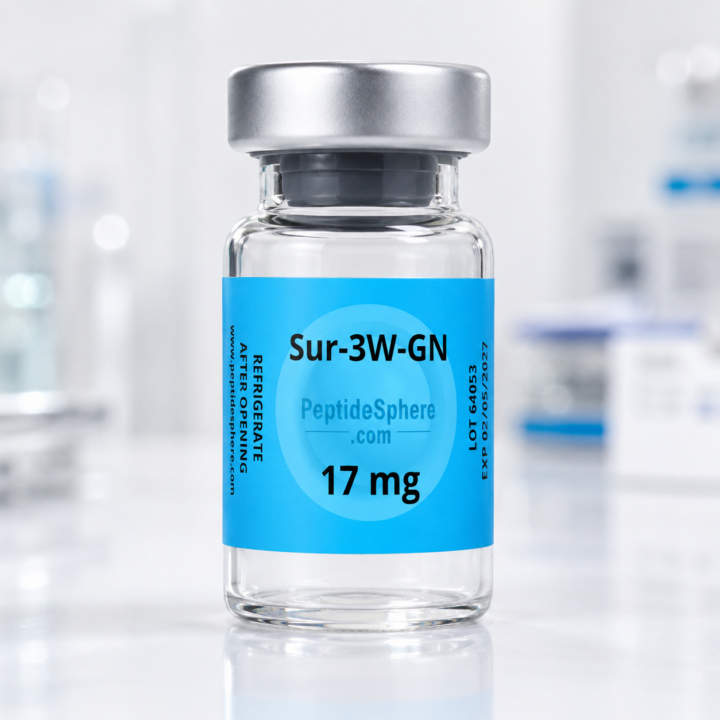
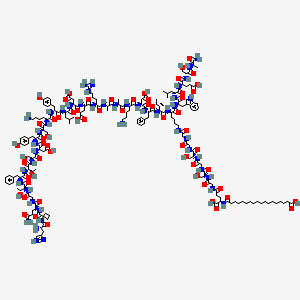
Sur-3W-GN (BI 456906)
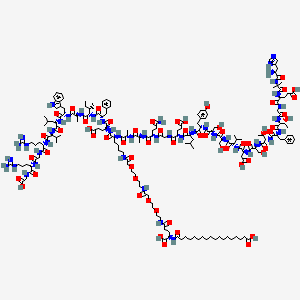
Sur-3W-GN is an investigational dual receptor agonist peptide developed by Boehringer Ingelheim (in collaboration with Zealand Pharma) that targets both the GLP-1 receptor and the glucagon receptor. It is being studied primarily for the treatment of obesity/overweight and metabolic dysfunction-associated steatohepatitis (MASH, formerly NASH). By combining GLP-1-mediated appetite suppression with glucagon-mediated increases in energy expenditure and fat metabolism, Sur-3W-GN aims to deliver robust weight loss while improving liver health.
Note: Sur-3W-GN is not FDA-approved and remains in Phase 3 clinical development as of 2026.
Peptides it may pair well with (research interest only):
Peptides/Drugs to Avoid Combining:
Sur-3W-GN (BI 456906)
Sur-3W-GN is an investigational dual receptor agonist peptide developed by Boehringer Ingelheim (in collaboration with Zealand Pharma) that targets both the GLP-1 receptor and the glucagon receptor. It is being studied primarily for the treatment of obesity/overweight and metabolic dysfunction-associated steatohepatitis (MASH, formerly NASH). By combining GLP-1-mediated appetite suppression with glucagon-mediated increases in energy expenditure and fat metabolism, Sur-3W-GN aims to deliver robust weight loss while improving liver health.
Note: Sur-3W-GN is not FDA-approved and remains in Phase 3 clinical development as of 2026.
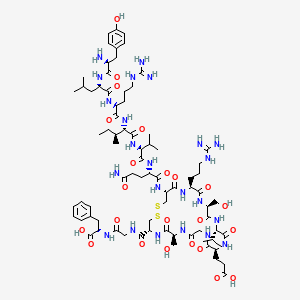
Peptides it may pair well with (research interest only):
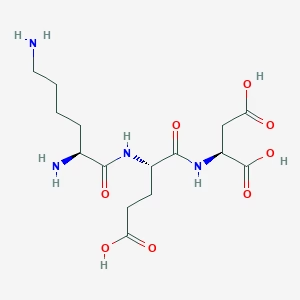
Peptides/Drugs to Avoid Combining:
Survodutide, a synthetic dual agonist of glucagon-like peptide-1 (GLP-1) and glucagon receptors, has gained attention in research for its role in regulating glucose metabolism, appetite, and energy expenditure. Designed to simultaneously activate GLP-1 and glucagon pathways, Survodutide is studied for its potential to modulate metabolic processes, making it a promising candidate for research in obesity, diabetes, and metabolic disorders.
Glucose Metabolism: Survodutide is widely studied for its ability to enhance insulin secretion and improve glycemic control, leveraging GLP-1 receptor activation in experimental models.
Weight Management: Researchers are investigating Survodutide’s potential to promote weight loss by suppressing appetite (via GLP-1) and increasing energy expenditure (via glucagon) in metabolic studies.
Metabolic Disorders: Preliminary studies have explored Survodutide’s applications in addressing conditions like type 2 diabetes and non-alcoholic fatty liver disease, focusing on its dual-agonist mechanism.
Survodutide’s dual specificity for GLP-1 and glucagon receptors and its potent effects on glucose regulation, appetite suppression, and energy balance make it a valuable tool for studying complex metabolic pathways. Its stability and targeted design enable researchers to explore therapeutic applications in obesity, diabetes, and metabolic health.
Survodutide is offered exclusively for laboratory research purposes. It is not approved for human or animal use, nor is it intended to diagnose, treat, cure, or prevent any disease or condition.
This website contains research products intended only for adults 21 years of age or older.
By entering this site, you confirm that:
Please complete the form below to continue.

Reviews
There are no reviews yet.