

10% OFF your first purchase use code WELCOME10
$112.50 Original price was: $112.50.$75.00Current price is: $75.00.
Out of stock
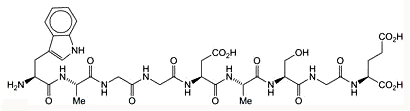
DSIP (Delta Sleep-Inducing Peptide)
Delta Sleep-Inducing Peptide (DSIP) is a naturally occurring neuropeptide composed of nine amino acids. It was first discovered in the cerebral venous blood of rabbits during sleep induction experiments. DSIP has been studied for its potential role in regulating sleep cycles, modulating stress responses, and influencing several physiological processes.
Research Properties:
Administration in Research:
For Research Use Only. Not for human consumption. DSIP is intended strictly for laboratory research and in-vitro experimentation.
DSIP (Delta Sleep-Inducing Peptide)
Delta Sleep-Inducing Peptide (DSIP) is a naturally occurring neuropeptide composed of nine amino acids. It was first discovered in the cerebral venous blood of rabbits during sleep induction experiments. DSIP has been studied for its potential role in regulating sleep cycles, modulating stress responses, and influencing several physiological processes.
Research Properties:
Administration in Research:
For Research Use Only. Not for human consumption. DSIP is intended strictly for laboratory research and in-vitro experimentation.
Delta Sleep-Inducing Peptide (DSIP), a naturally occurring nonapeptide, has gained attention in research for its potential role in regulating sleep, stress responses, and neuroendocrine function. DSIP is studied for its ability to influence neurotransmitter systems and physiological processes, making it a promising candidate for research in sleep disorders, stress modulation, and neurological health.
CJC-1295 w/ DAC is widely studied for its potential role in:
DSIP’s potential to modulate sleep, stress, and neuroendocrine pathways makes it a valuable tool for studying complex physiological processes. Its stability and targeted action enable researchers to explore therapeutic pathways in sleep disorders, stress-related conditions, and neuroprotection.
DSIP is offered exclusively forlaboratory research purposes.It is not approved for human or animal use, nor is it intended to diagnose, treat, cure, or prevent any disease or condition.
This website contains research products intended only for adults 21 years of age or older.
By entering this site, you confirm that:
Please complete the form below to continue.

Reviews
There are no reviews yet.